


PDO olive oils: a guide to pairing food and oil to bring out the best in your dishes
Terroir, balance and enjoyment: everything you need to know about pairing the nine French PDO olive oils with your cooking.
Olive oil is not just a fat: it is a condiment in its own right, a hallmark of a region and of expertise. France has nine olive oils with Protected Designation of Origin status (PDO), each with its own unique flavour profile — intense, subtle or mature. But you still need to know which one to choose for which dish. Here is the complete guide to finding the perfect, balanced and delicious pairing.
The 9 French PDO olive oils at a glance

- Nyons olive oil PDO (subtle flavour, mild with notes of hazelnut, walnut and apple, and a hint of butteriness on the finish)
- Provence olive oil PDO, available in 2 versions:
- an intense flavour with a predominantly vegetal character
- ripe olives with hints of olives and toast
- Aix-en-Provence olive oil PDO, available in two versions:
- intense flavour, with notes of artichoke, grass and dried fruit
- ripe olives with dominant notes of sourdough bread and black olives…
- Haute-Provence olive oil PDO — intense flavour, dominated by artichoke, with hints of fresh almond and banana (or apple)
- Nice olive oil PDO — subtle, mild flavour with dominant almond notes, sometimes floral, and delicate herbaceous notes.
- Olive oil from the Vallée des Baux-de-Provence PDO is available in two versions:
- an intense flavour, with dominant notes of grass and artichoke, and a slight peppery edge.
- ripe olives with pronounced notes of olives, olive paste and cocoa.
- Nîmes olive oil PDO — intense flavour, where grass and hay mingle with notes of plum and pineapple.
- Languedoc olive oil PDO — intense flavour with dominant notes of tomato and fresh almond.
- Corsican olive oil PDO, available in two versions:
- an intense flavour for the ‘harvested from the tree’ variety, with notes of almond, artichoke and hay in particular.
- a flavour closer to that of a matured oil for the ‘traditional harvest’, with notes of black olive and maquis…
Key point: to put it very simply, an oil with an intense flavour will tend to be fiery and herbaceous (perfect for waking you up), one with a subtle flavour will be mild and fruity (ideal for bringing out delicate flavours), whilst one that has been aged will be very mild, rounded and with lingering aromas (reminiscent of fermentation, oak, etc.).
Pairings by type of dish
Starters and raw vegetables: freshness above all else
It is here that PDO olive oils reveal their true character: freshly pressed, it coats raw vegetables and mixed salads with a fruity veil that brings out the most delicate flavours, whilst providing those precious unsaturated fatty acids to get your meal off to a good start.
- Tomatoes and mozzarella, summer salads: whether from Haute-Provence, Nîmes or Languedoc, their herbaceous notes—sometimes balanced by a hint of fruit—and their bitterness and tang bring out the flavour of tomatoes or summer salads such as tabbouleh.
- Salads of mild raw vegetables (carrots, beetroot): Nice or Nyons – their velvety texture doesn’t overpower the vegetables, but gently enhances them!
- Tapenades, anchoïades and vegetable caviars: Provence, Aix-en-Provence or the Baux-de-Provence Valley, with their mature flavour; their notes of olives, cocoa and toasted bread (…) create a subtle balance with these typical southern recipes.

Fish and seafood: a delicate balance

When paired with the delicate, briny flavours of seafood, PDO olive oils act as the perfect complement: their subtle bitterness and herbaceous notes enhance the flavour of the fish without overpowering it, whilst their fats aid the absorption of the valuable omega-3s they contain.
- Grilled fish or fine fish tartare (sea bream, sea bass, etc.): a drizzle of oil from Corsica, Nice or Nyons at the end of cooking — their almond and apple aromas enhance the flesh without overpowering it.
- Ceviche or tartare of oily fish (salmon, tuna, etc.): Aix-en-Provence, Vallée des Baux-de-Provence, Languedoc – their intense character acts as a condiment.
- Bouillabaisse and fish soups: Provence, Haute-Provence, Nîmes – whose intensity holds its own against saffron and pastis.
Meat and ready meals: a masterful contrast
In dishes served with sauce or meats with strong flavours, PDO olive oils dare to create a contrast, their powerful fruity or woody notes standing out against the tenderness of the meat. For more subtle meats, the delicate flavour of certain PDO olive oils preserves the tenderness and adds, in subtle touches, aromatic notes that blend with those of the meat. Furthermore, its heat stability makes it a healthy alternative to the saturated fats found in traditional recipes.
- Grilled beef steak, lamb: Aix-en-Provence or Haute-Provence – power meets power.
- Veal chop: Languedoc, with its notes that are both mellow and herbaceous, enhances the flavour without overpowering it.
- Stews, casseroles and slow-cooked dishes: a ‘Filet de Provence’ – with matured olives – or a ‘Corse récolte à l’ancienne’, added at the end of cooking; the hot/cold contrast and the cocoa or maquis notes revitalise these long-simmered dishes.
- Roast chicken: A Nice wine, with its rounded, almondy character enhanced by a vegetal note, envelops the white meat of the chicken.

Cheeses: harmonious pairings

Contrary to popular belief, olive oil goes wonderfully with cheese! A few drops on a fresh cheese or a mature pecorino soften the saltiness and bring out the milky flavour, creating a pairing with sunny notes or a touch of freshness, depending on your preference...
- Fresh goat’s and sheep’s cheeses: Nyons or Nice – a velvety pairing where mildness meets mildness.
- Matured cheeses (blue cheeses, tommes): Vallée des Baux-de-Provence, Aix-en-Provence, or Provence – the bitterness contrasts with the richness and lends it a lightness. For the richest cheeses, don’t hesitate to add a few drops of Nîmes with its pronounced bitterness!
Desserts: shall we give it a go?
Yes, let’s be bold: in sweet dishes, PDO olive oils surprise with their fruity, vegetal or, at times, cocoa- or vanilla-like notes, making an excellent substitute for butter in moist cakes and madeleines to create a dessert that is even more moist, more distinctive, yet still utterly indulgent.
- Dark chocolate and chocolate desserts: for these, the ideal pairing is with PDO olive oils with a mature flavour, whose notes of cocoa and vanilla are a perfect match for chocolate.
- Strawberries, melon, ice cream: a few drops of Nyons olive oil and a pinch of fleur de sel: the contrast between the nutty and sweet flavours is both surprising and delightful.

The final catch: the golden rule
PDO olive oil is best enjoyed raw or as a dressing on hot dishes. It is possible to cook with PDO (such as when preparing vegetables or baking fish at a low temperature), but heat causes the subtle flavours to evaporate. Instead, add it at the end of cooking or at the table to fully enjoy its fruitiness and aromas. And for high-heat cooking, use a more ‘basic’ olive oil.
And as PDO olive oils are characterised by their terroir (and are pure fruit juices), they have enough flavour that you don’t need to use much! Just a drizzle is enough to enhance any dish!
Fun first and foremost!
These pairing suggestions are just that: suggestions! Don’t hesitate to venture off the beaten track and try out your own combinations! The secret to a successful pairing? That you enjoy it.
Your questions, our answers
Do you need just one type of olive oil in your kitchen? No! It’s best to have three or four: an PDO with an intense flavour for seasoning and adding a kick, an PDO with a subtle flavour for delicate dishes and breakfast, an PDO with a mature flavour (from Provence) for bold flavour combinations, and an extra virgin olive oil for slow cooking or high-temperature cooking!
Can you cook with PDO olive oil? Yes, over a low or medium heat. For deep-frying and grilling at high temperatures, opt for a neutral oil and save your PDO for the final seasoning.
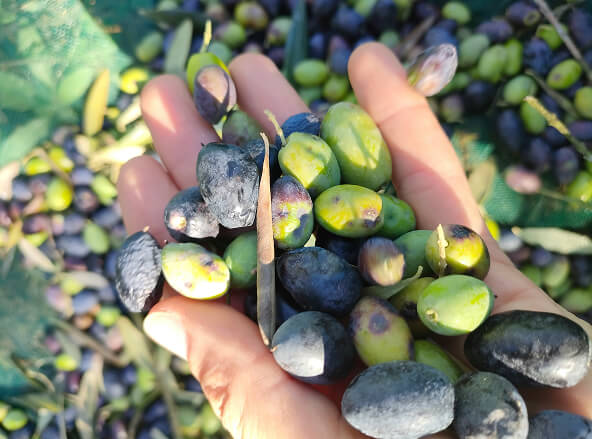
What is the difference between an intense flavour, a subtle flavour and a mature flavour? The intense flavour comes from olives harvested before they are fully ripe: notes of herbs, artichoke, bitterness and a pungent aftertaste. A subtle flavour comes from ripe olives: roundness, almond and apple notes. A mature flavour results from controlled fermentation of the olives: cocoa, vanilla, mushroom and an almost sweet taste.
How should you store your PDO olive oil? Keep it away from light, heat and air, in a sealed bottle. It keeps for 18 to 24 months after harvest. It may become cloudy or set when kept cool: this is normal and does not affect the quality. It is best consumed within a year of harvest, when the fruitiness is at its peak.
Is a bitter or pungent olive oil of poor quality? On the contrary! Bitterness and pungency (the ‘tingle’ in the throat) are indicators of quality: they signify a high content of polyphenols and antioxidants. A good PDO olive oil has an intense, pungent flavour – that’s its hallmark.
Tips from the connoisseur
- Always taste with a spoon before seasoning: just as with wine, you learn to recognise each PDO.
- Think ‘balance’: a mild dish = a mild oil; a bold dish = an intense oil. That’s the rule of pairing, with its creative exceptions (deliberate contrast).
- Make a note of your favourite pairings: your palate is the best judge.
The pairing of PDO olive oil with a delicious dish is a bit like that of wine and cheese: it’s all about terroir, balance and, above all, enjoyment. So next time you open a bottle of Nyons, Vallée des Baux or Corsican wine, take the time to smell it, taste it… and let it take you beyond a simple salad. Your taste buds will thank you for it.