


Huile d'olive de Nîmes PDO
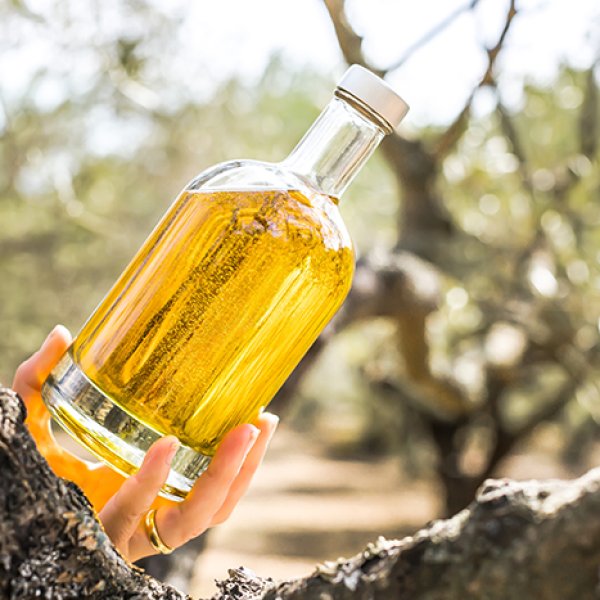

The PDO huile d'olive de Nîmes owes its character to the predominant presence of the Picholine variety in the oil, which gives it an intense flavour. It is ideal with vegetables (artichokes, tomatoes, broccoli, etc.), green salads (rocket, curly endive, etc.), fish such as red mullet, trout or salmon, meat dishes and desserts featuring red berries.
What does Huile d'olive de Nîmes PDO taste like?
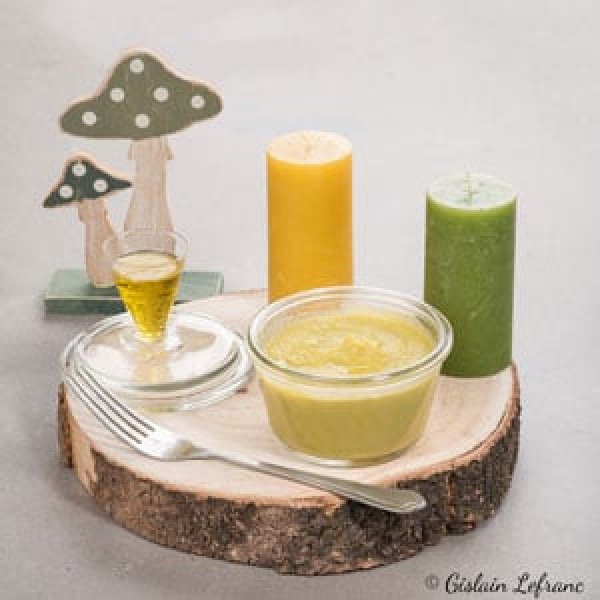
Sometimes green with hints of yellow, the PDO huile d'olive de Nîmes owes its character to the Picholine variety, which makes up the vast majority of the blend.
On the nose, vegetal notes dominate: fresh grass, cut hay, raw artichoke and tomato plant.
On the palate, the fruitiness is herbaceous, with notes of hay and raw artichoke, enhanced by pineapple and yellow plum, and occasionally a hint of red plum or apple.
The Huile d'olive de Nîmes PDO varieties
The PDO huile d'olive de Nîmes is primarily made from the Picholine variety, which must account for at least 70 per cent of the trees in the farm’s orchards.
It is complemented by two additional varieties, Négrette and Noirette. Together, the main variety and the complementary varieties make up at least 85 per cent of the trees.
The remainder gives pride of place to the local heritage: Sauzen vert, Rougette, Olivastre, Broutignan, Vermillau, Cul blanc, Verdale de l’Hérault (or Groussaldo), Aglandau, Amellau, Pigalle, Piquette, as well as the old local varieties present before the frost of 1956.
Olive harvesting for Huile d'olive de Nîmes PDO
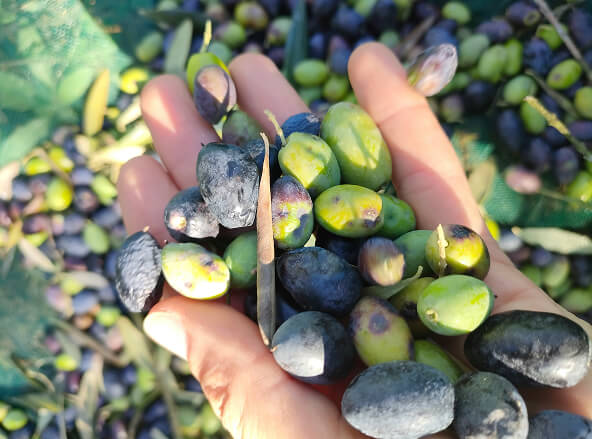
Olives are harvested directly from the tree, either by hand or using mechanical methods.
Whichever method is used, the fruit must fall onto nets or other receptacles placed beneath the tree, so that it never touches the ground.
Abscission fruit, i.e. fruit that has fallen naturally, is prohibited. Similarly, no olives picked up from the ground may be used in the production of PDO oil. These olives must be stored separately, apart from the batches intended for the appellation.
From October to December
Extraction of Huile d'olive de Nîmes PDO
It all starts with healthy olives, harvested just as they reach maturity, when at least 10 per cent of them are ‘turning’, having changed from bright green to yellow.
Defects are strictly limited: a maximum of 5 per cent of olives damaged by pests, 10 per cent for those affected by hail, and 0 per cent for those affected by frost or mould. These thresholds cannot be combined.
The olives are transported in slatted crates or palloxes and must arrive at the mill within 3 days (crates) or 24 hours (palloxes). They are then stored for a maximum of 4 days in a temperate, dry and frost-free location.
No more than six days elapse between harvesting and pressing: this guarantees that the oil is pressed from fresh fruit.
By the numbers
Specifications
Specifications – Nîmes olive oil PDOHow to cook with Huile d'olive de Nîmes PDO
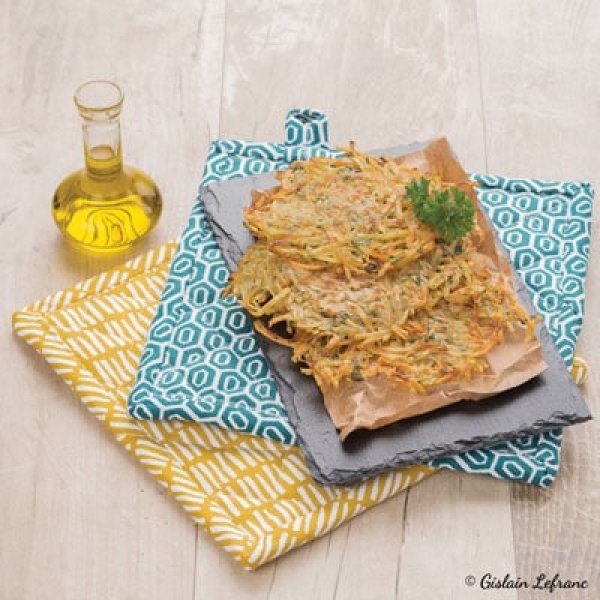
It is ideal with vegetables (artichokes, tomatoes, broccoli, etc.), green salads (rocket, curly endive, etc.), fish such as red mullet, trout or salmon, meat dishes and desserts featuring red berries.

Discover Olives de Nîmes PDO
Discover the terroir of Nîmes