


Huile d'olive de Nyons PDO
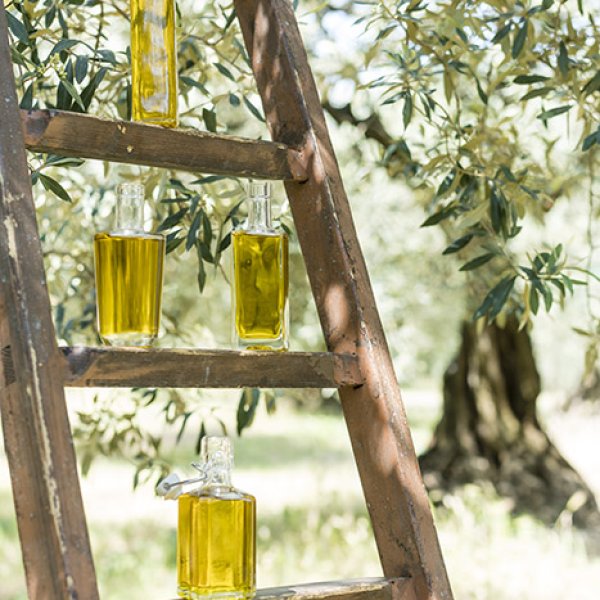
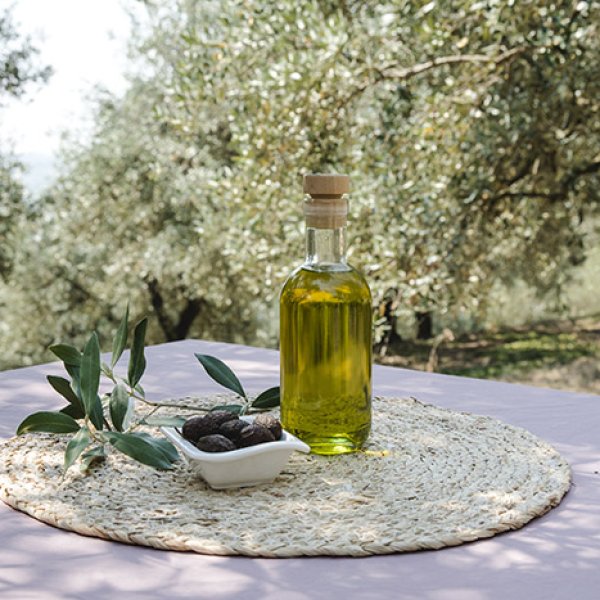
The PDO huile d'olive de Nyons is a subtle, mild-tasting oil with hints of dried fruit.
It pairs perfectly with delicate dishes (fish, vegetables, poultry, etc.) and can also be used in baking.
What does Huile d'olive de Nyons PDO taste like?
Nyons olive oil captivates from the very first taste. Its bouquet evokes green apple, accompanied by aromas of dried fruit, and sometimes notes of fresh hazelnuts or freshly cut grass.
On the palate, it is a smooth oil with a buttery flavour, which tasters describe as ‘rich’, in contrast to those ‘lighter’ oils that glide over the palate without leaving a trace. It coats the palate with a rounded, generous mouthfeel.
Its character remains understated: slightly bitter and barely ‘pungent’ – that is to say, not very sharp – it scores 2 or below out of 10 for each of these two criteria on the International Olive Council’s (IOC) organoleptic scale.
The Huile d'olive de Nyons PDO variety
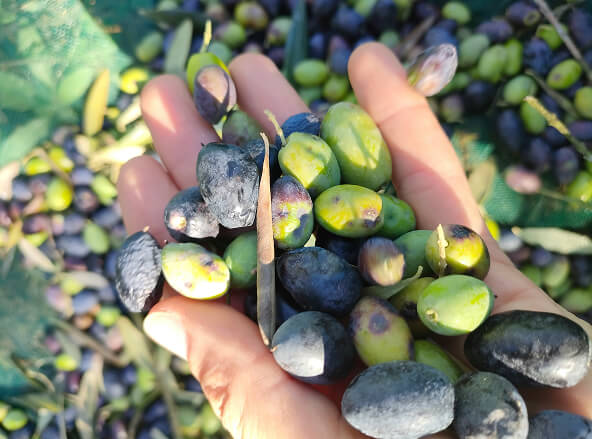
In the orchards of the ‘Nyons Olive Oil’ appellation, the Tanche reigns supreme. This iconic variety from the Drôme Provençale produces black olives with a delicate flesh and a uniquely recognisable aroma. However, to ensure the trees bear fruit as well as possible, a little space is set aside for a few companions: pollinator varieties.
The specifications therefore allow these to be planted within each orchard, provided they are distributed evenly and their number does not exceed 5 per cent of the trees in the orchard. For the smallest holdings – those with 20 trees or fewer – the rule is relaxed: the presence of a single pollinator tree is permitted.
This flexibility extends to the mill. Olives from these pollinator varieties may be used in the production of Nyons olive oil, but in a proportion not exceeding 5 per cent of the total weight of olives processed. In this way, the oil retains its identity – that of Tanche – whilst allowing nature the assistance it needs to bear fruit.
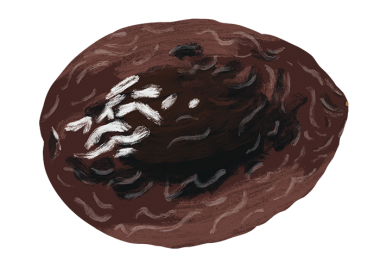
Olive harvesting for Huile d'olive de Nyons PDO
In 2025, the Nyons olive harvest yielded 436,680 litres of olive oil.
To qualify for the designation of origin, the olives must be harvested directly from the tree. There are two possible methods: hand-picking, or the use of mechanical equipment, such as trunk or branch shakers and vibrating or oscillating combs. However, abscission agents, which cause the fruit to fall, are strictly prohibited.
Olives that have fallen naturally before harvest, as well as those picked up from the ground, are excluded from the production of ‘Nyons Olive Oil’. They must be stored separately from batches eligible for the designation.
Specific rules also govern the use of nets. On plots harvested using nets, ploughing is prohibited after 15 September, to allow the grass to grow. Where permanent nets are installed, they must be cleared before the harvest of olives intended for the designation of origin, so that only olives picked directly from the tree are retained.
From November to January
Extraction of Huile d'olive de Nyons PDO
The ‘Nyons Olive Oil’ designation of origin is based on a strict set of specifications, which govern every stage of the process, from harvesting to extraction.
Healthy, ripe olives
Only healthy olives are used. Those damaged by frost or pests must not exceed 10 per cent of the total number of olives in each batch. The olives must also be harvested at the right stage of ripeness: a batch is considered to be at the right stage of ripeness when at least 65 per cent of the harvested olives are no longer green in colour.
Careful harvesting and transport
From the moment of harvest, and throughout transport from the orchard to the first sorting or pressing facility, the olives are stored in slatted crates with a maximum capacity of 20 kg. This method of storage minimises damage to the fruit and ensures good ventilation.
Short lead times
The olives are delivered to the mill no later than three days after harvesting, in good condition. They may be stored at the mill for no more than four days prior to processing, provided that the total time between harvesting and processing does not exceed six days.
Cold extraction
If the olives are washed, the water must not exceed 27 °C. Extraction involves only mechanical processes, and the olive paste must not be heated above 27 °C at any stage. Finally, with the exception of water, the use of additives to facilitate extraction is prohibited.
These rules guarantee that the oil is produced from fresh, ripe olives processed under conditions that preserve their qualities.
By the numbers
Specifications
Specifications - Nyons PDO olive oilHow to cook with Huile d'olive de Nyons PDO
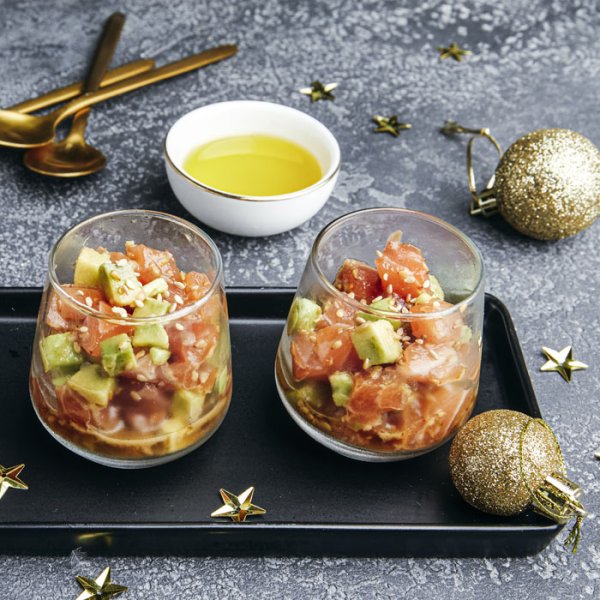
Nyons olive oil PDO pairs perfectly with fine dishes (fish, vegetables, poultry, etc.) and adds a smooth, mellow flavour and subtle notes to baked goods.

Discover Olives noires de Nyons PDO
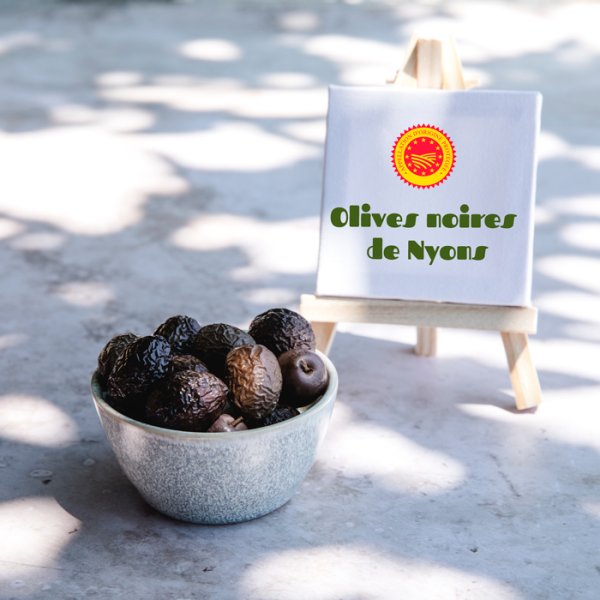
Discover the terroir of Nyons