


Olives noires de Nyons PDO
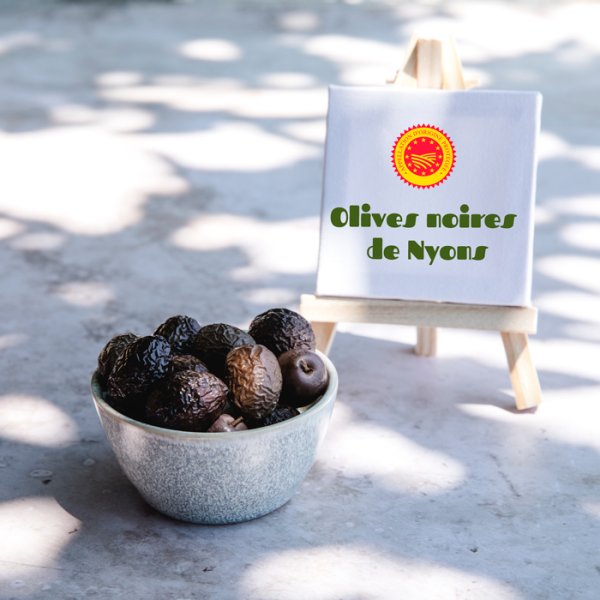

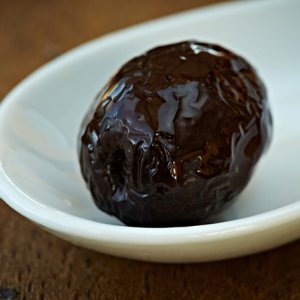
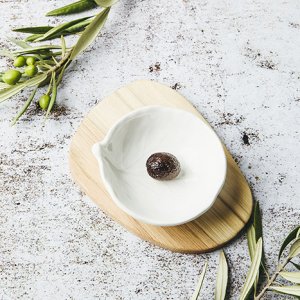
Of the Tanche variety, it is harvested in December and January. Its flesh is delicate, creamy and fragrant. The fruit is fleshy and finely wrinkled. The PDO Olives noires de Nyons reveals fruity aromas, notes of woodland, red berries, ripe olives, chocolate and vanilla.
What do Olives noires de Nyons PDO taste like?
Their aromatic profile, which is fruity and indulgent, evokes ripe olives, chocolate, vanilla, forest floor and, at times, red berries, with nuances that vary from one blend to the next.
Physical characteristics
The Olives noires de Nyons PDO variety
The PDO Olives noires de Nyons come from a single variety, Tanche, a local, heritage olive perfectly suited to the local growing conditions. Harvested when fully ripe, they are prepared without any preservatives, in keeping with tradition.
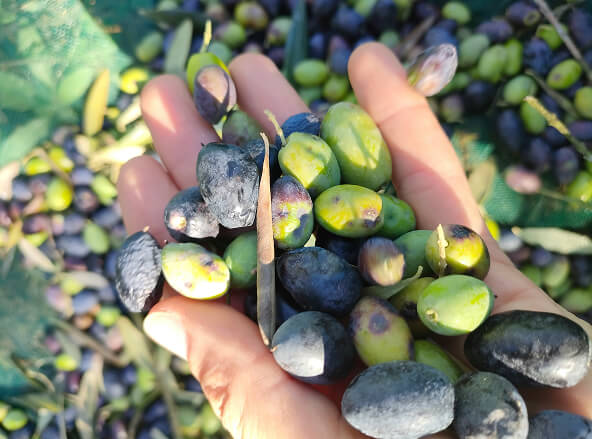
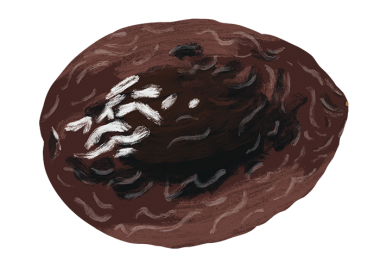
They are recognisable by their ‘monk’s habit’-brown colour, which can be as dark as black, and their wrinkled skin – a characteristic found in at least 60 per cent of the fruit. Their flesh is delicate, creamy and fragrant, and separates easily from the stone. An authentic olive that brings all the richness of Provence to both aperitifs and everyday dishes.
Harvesting Olives noires de Nyons PDO
To qualify for the PDO ‘Olives noires de Nyons’ designation of origin, the olives must be picked when fully ripe. This means that a harvest batch must contain at least 70 per cent black or turning olives, of which at least 50 per cent must be black olives and 40 per cent must be wrinkled olives.
Harvesting takes place directly from the tree, either by hand or using trunk or branch shakers. Vibrating or oscillating combs, however, are not permitted, nor are abscission agents, which are strictly prohibited.
Olives that have fallen naturally before harvest or been gathered from the ground may not be used in the production of ‘Olives noires de Nyons’. They must be stored separately from batches eligible for the appellation.
Rules also govern the management of the plots. Where nets are used, ploughing is prohibited after 15 September, in order to encourage grass growth. Finally, if the nets are permanent, they must be cleared before the harvest of olives intended for the appellation.
The olives are placed in slatted crates, with a maximum capacity of 20 kg, and remain there until they are put into storage. This requirement prevents the fruit from being crushed and promotes ventilation.
Time then plays a crucial role. The olives must be delivered to the processors no later than three days after harvesting, and must be in good condition: they must not contain more than 10 per cent of rotten, frost-damaged or hail-damaged fruit. Once they arrive at the processing plant, they are prepared within a maximum of four days of delivery. In total, the time between harvesting and processing never exceeds six days.
To ensure the preservation of black olives, the processing facilities must be located within the geographical production area. The olives are graded before processing, then sorted, either before or after processing. Finally, the preparation process is very simple: no chemicals or preservatives are used, with the exception of sodium chloride, i.e. salt.
All these precautions guarantee the quality and authenticity of a product that is emblematic of the Drôme Provençale.
From December to January
By the numbers
Specifications
Specifications - Nyons black olives PDOHow to cook with Olives noires de Nyons PDO
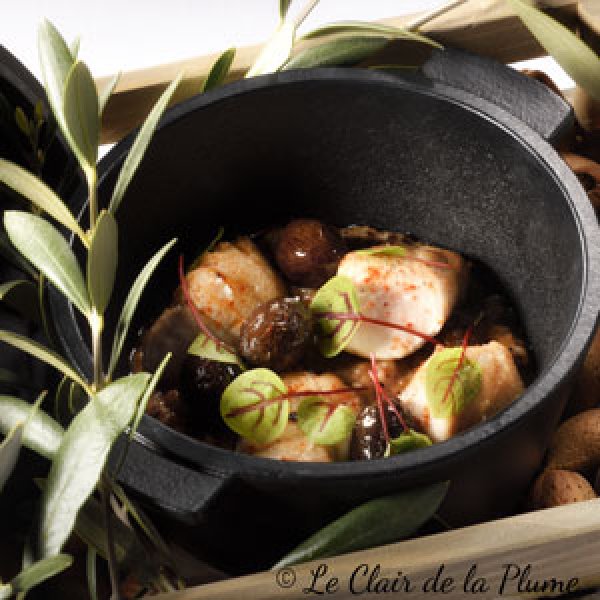
It can be enjoyed as an aperitif or used in cooking, from starters to desserts.


Discover Huile d'olive de Nyons PDO
Discover the terroir of Nyons