

Olives cassées de la Vallée des Baux-de-Provence PDO
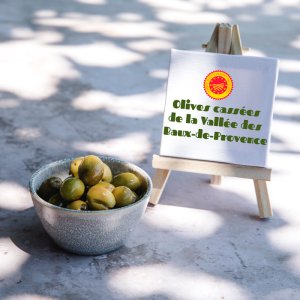
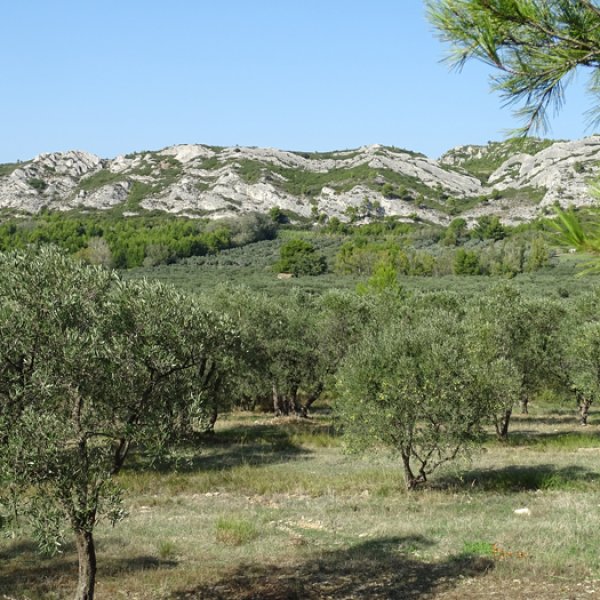
The Baux-de-Provence Valley is situated in the heart of the Alpilles Regional Nature Park in the Bouches-du-Rhône. This olive-growing region is home to four products with Protected Designation of Origin status (PDO): two olive oils with very distinct characteristics: the olives noires (black olives) and the olives cassées (cracked olives) de la Vallée des Baux-de-Provence PDO, which you can discover here.
What do Olives cassées de la Vallée des Baux-de-Provence PDO taste like?
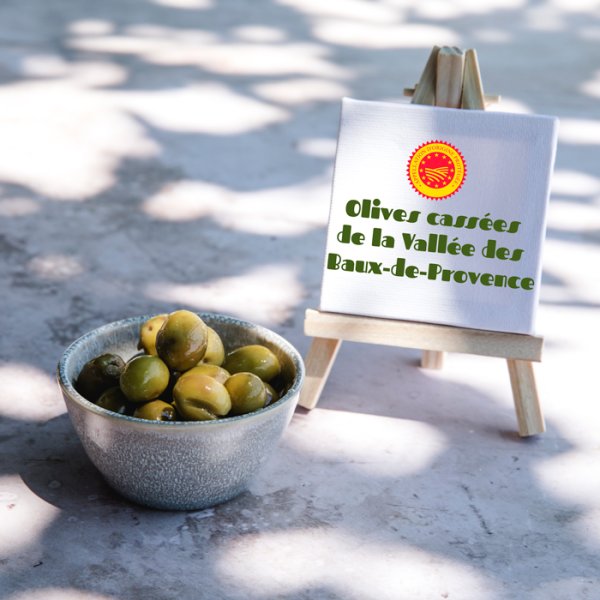
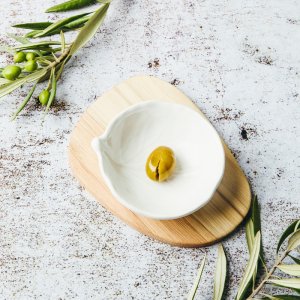
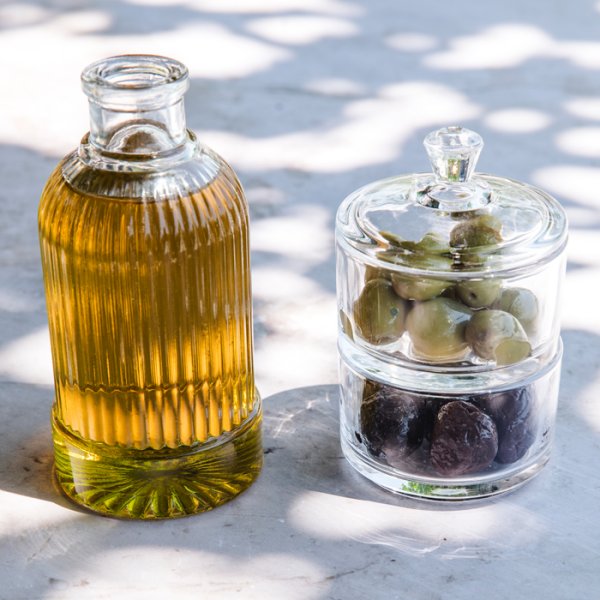
The PDO olives cassées de la Vallée des Baux-de-Provence are green olives flavoured with fennel. Firm to the bite, they have a pronounced fennel flavour, sometimes with a slight bitterness. You’ll find them on sale with pieces of fennel stalk.
Physical characteristics
The Olives cassées de la Vallée des Baux-de-Provence PDO varieties
The PDO olives cassées de la Vallée des Baux-de-Provence PDO come exclusively from the Salonenque and Aglandau (also known as ‘Béruguette’) varieties, which are among the region’s ancient and traditional varieties.
Harvesting Olives cassées de la Vallée des Baux-de-Provence PDO
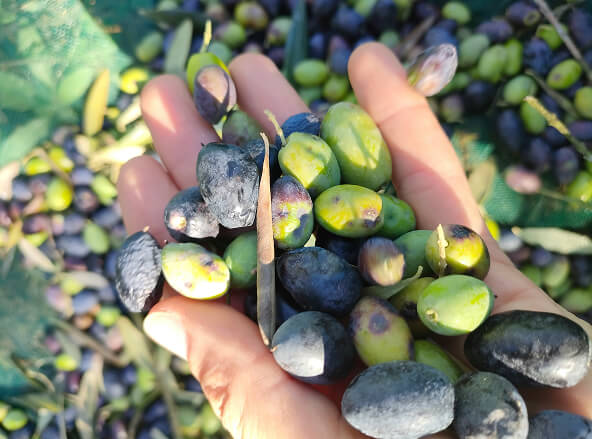
The production of crushed green olives is a practice found almost exclusively in the Baux-de-Provence valley. The harvest of olives intended for this method
of preparation begins every year at the end of August. The uniqueness of this production lies mainly in the ‘crushing’ of the olives, which, although now mechanised, was for a long time carried out by hand, making it a traditional activity in this region. The production method is simple and traditional: after cracking, the olives are left to macerate in
an alkaline solution until the bitterness is partially removed. The alkaline solution is then replaced with pure water, in which the olives are left for at least thirty-six hours, with the water being changed regularly. The olives are then stored in brine (a mixture of water and sea salt).
From late August to late September
Preparation method
Broken
Cracking olives is a quick autumn method used exclusively for fresh green olives. The flesh of the fruit is gently cracked without breaking the stone, which significantly speeds up the loss of bitterness during successive water soaks. In less than two weeks, the olives are ready to eat, with a very crunchy texture and fresh aromatic notes.
By the numbers
A little extra
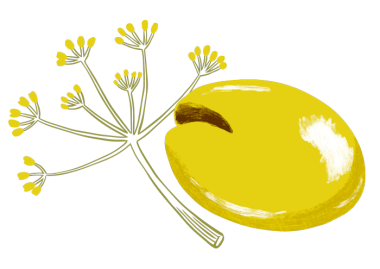
The PDO olives cassées de la Vallée des Baux-de-Provence are flavoured exclusively with fennel (Foeniculum vulgare var.) exclusively, using the plant’s foliage and seeds, which are found in abundance in the Baux-de-Provence Valley PDO.
How to cook with Olives cassées de la Vallée des Baux-de-Provence PDO
Ideal for aperitifs, the PDO olives cassées de la Vallée des Baux-de-Provence can be used in a wide range of savoury dishes, particularly in dishes with a sauce or with pan-fried vegetables. Their distinctive fennel flavour will add a new dimension to your dishes.
Discover other products from this PDO
Discover this PDO