


Olive oil is pure fruit juice: a natural, living product whose flavours depend on many factors — the variety or varieties of olives, the terroir, and the producer’s expertise. But unlike wine, it does not improve with age: it oxidises.
The 3 enemies of your olive oil
Premature rancidity is almost always linked to storage conditions.
Three factors are to blame:
- Air: when exposed to oxygen, the oil develops a rancid taste. When protected from air, it keeps perfectly well — in fact, it is traditionally used as a food preservative.
- Light: this significantly accelerates the rancidity process.
- Temperature fluctuations: significant variations weaken the oil.
This is why producers store their oils at a constant temperature, in stainless-steel tanks – very often under vacuum – and bottle them as and when required.
Increasingly, they are opting for opaque or tinted glass bottles, metal cans or bag-in-box packaging, to ensure the oil remains protected from light even after bottling.


Good consumer habits
Once you have the bottle in your hands, it’s up to you to store it properly.
Here are some simple steps to help preserve all the flavour qualities of your oil:
- Choose opaque containers over transparent bottles. Admittedly, seeing the colour of the oil is more appealing, but what you lose in aesthetics, you gain in preservation!
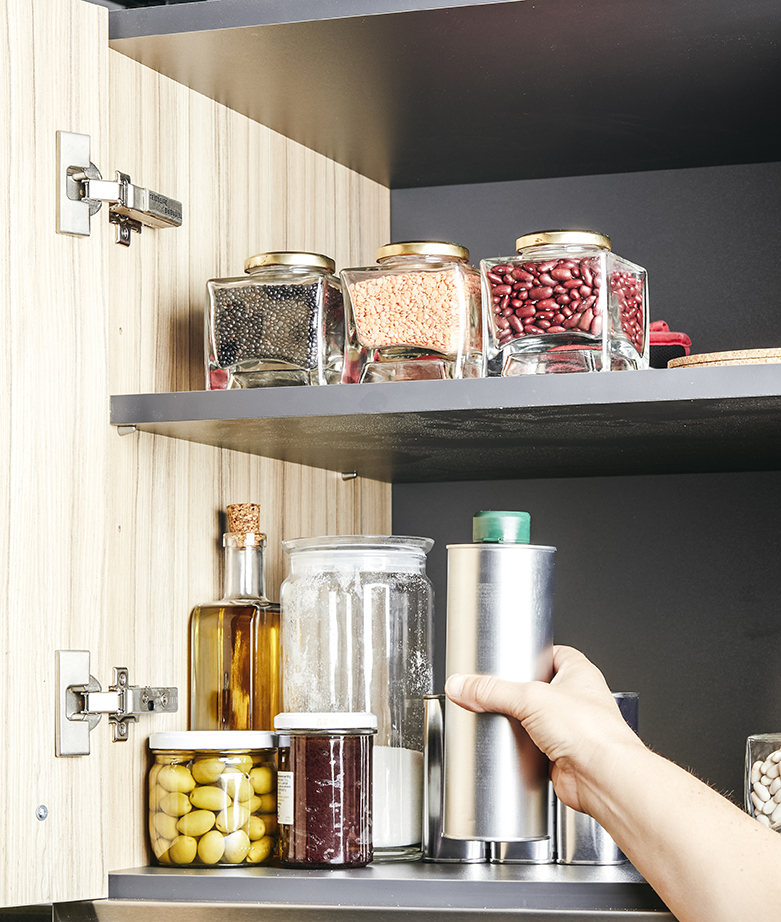
- Store the bottle in a cupboard: this will provide double protection from light.
- Keep it in a cool, dry place, away from temperature fluctuations (and definitely not above the hob!).
- Do not transfer the oil into earthenware or stoneware bottles, even if they look very attractive: as they are porous, they are completely unsuitable.
- Close the bottle tightly after each use and use it within 3 months of opening. After that, the oil remains edible but gradually loses its aromatic qualities.
My olive oil has gone solid – is that a problem?
No, don’t worry! When exposed to the cold, olive oil can solidify or become cloudy. Simply bring it back to room temperature and it will regain its fluidity and colour. This does not affect its taste or shelf life.
Good to know!
Rancid oil is not harmful to your health.
It’s a shame, however, to miss out on its organoleptic qualities whilst you still can – especially as preserving the quality of olive oil is actually quite simple!
Especially as, with over 100 typical varieties, around twenty different terroirs and traditional, artisanal expertise, French olive oils offer an endless array of flavours.
Find out more: the science of oxidation
The oxidation of a vegetable oil is a chemical reaction between the oxygen (O₂) present in the air and the fatty acids that make up the oil. Oxygen reacts with the double bonds in the fatty acids to form a peroxide ‘radical’ — indeed, the degree of oxidation in an oil is measured by its peroxide value.
Once initiated at one or more double bonds, oxidation spreads to neighbouring fatty acids: it is a self-sustaining chain reaction. This is why even a small amount of rancid oil in contact with fresh oil is enough to cause the fresh oil to go rancid quickly.
The two types of oxidation
- Auto-oxidation: inevitable and spontaneous, this is a purely chemical reaction triggered by contact between oxygen and compounds susceptible to oxidation. An open bottle contains more and more oxygen with each use, which accelerates rancidity — hence the importance of resealing the bottle properly and using the oil quickly.
- Photo-oxidation: when exposed to light, light-sensitive compounds are destabilised by UV radiation and react more readily with oxygen.
Composition of virgin olive oils
They contain two families of compounds that play opposing roles:
- Compounds that oxidise easily: certain free fatty acids, triglycerides, volatile compounds, chlorophylls, etc. These are the ones that need to be protected from oxygen and light.
- Compounds that slow down oxidation: antioxidants, particularly phenolic compounds and tocopherols.